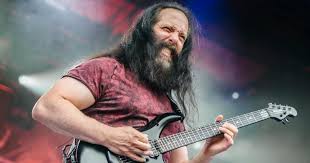
John Petrucci — £500 · Sweet Spot Tone
At £500 · Sweet Spot, John Petrucci's layered and compositionally bold tone is more accessible than most players expect. Rooted in a defining era for electric guitar, their sound — John Petrucci of Dream Theater is the benchmark for progressive metal guitar — combining the precision of a classical musician with the aggression of metal, switching seamlessly between pristine clean passages and brutal high-gain leads. — starts with Ibanez RG421 EX and Boss Katana 50 MkII, totalling ~£478. That combination captures the defining characteristics without the premium price tag.
Build John Petrucci's £500 · Sweet Spot Rig
2 pieces · Total ~£478
What guitar does John Petrucci use?
John Petrucci is primarily associated with superstrat style guitars. At a £500 budget, Ibanez RG421 EX delivers the essential tonal character.
What to Buy
£500 · Sweet Spot — Complete Gear List
Why This Rig Works
How John Petrucci's gear choices create the signature tone
Ibanez RG421 EX
The Ibanez RG421 EX provides the tonal foundation for the entire rig — its character shapes everything that follows.
Boss Katana 50 MkII
Its 'Brown' amp character at low gain is an excellent approximation of the Fender-style clarity that Hendrix, Mayer, Gilmour and SRV all relied on. Built-in effects mean you're a few knob turns away from the right tone.
The Combined Tone
Music Man JP signature guitar (high-output DiMarzio pickups) into a Mesa Boogie JP-2C head. The JP-2C is effectively a Mark V customised for Petrucci — the clean channel is crystal clear with scooped mids, the lead channel delivers liquid high gain with extraordinary note separation at speed.
Tone Tips
Getting the Sound Right
- Alternate pick every run — Petrucci's picking discipline is his defining technical characteristic. Legato is used sparingly and intentionally
- The clean-to-heavy dynamic contrast is a Dream Theater signature — the clean tone must be genuinely clean, not slightly dirty
- Use seven-string guitar for the low chugging sections — Petrucci switched to 7-strings partly for the extended low range in rhythm parts
- Sweep picking arpeggios are used throughout his solos — practise three-string arpeggios before attempting five-string sweeps
- The Mesa JP-2C runs the lead channel at high gain but mid-forward — do not scoop the mids, the note clarity comes from keeping the midrange present
- Tone knob on the guitar at full — Petrucci never rolls back the tone. All brightness is used
- Practise with a metronome at 60% of target tempo — if the picking mechanics are sloppy at slow tempos, they will be sloppy at speed
- The neck pickup is used for clean passages and some solos — the warmer character suits the melodic sustained lead tones
Avoid These Pitfalls
Common Mistakes When Chasing This Tone
- Not using a gate on the Peavey 6505's high-gain channel — self-noise at this gain level is continuous and audible between notes. A noise gate is not a style choice; it is functional equipment for this gain level
- Forgetting to adjust technique for the different neck profile — thinner, faster necks require less grip pressure. Playing with the same pressure as on a thicker neck causes note choke.
- Running amp gain at 10 — above 8 on most high-gain channels, the signal becomes a compressed, indistinct wall. Moderate-high gain with a boost pedal in front gives better results.
- Skipping the Tube Screamer-style boost — this pedal before the amp's high-gain channel is not optional for many players. It tightens the low end, not adds gain. Gain on the pedal at 0.
- Too many repeats at high mix — more than 3 repeats makes the delay effect accumulate and overwhelm the dry guitar signal. Keep it to 2-3 repeats at a subtle mix level.
- Scooping mids to "sound heavier" — a guitar with mids removed disappears under bass and drums. Metal tone cuts through a mix, and that requires midrange.
- Using single-coil pickups — the lack of output and mid-frequency push makes it impossible to achieve the tightness needed for high-gain rhythm playing.
Budget Alternatives
Same Tone, Different Budget
FAQ
John Petrucci Tone — Common Questions
John Petrucci is primarily associated with superstrat style guitars. At a £500 budget, Ibanez RG421 EX delivers the essential tonal character.
John Petrucci's amp is high gain voiced — high-gain with significant distortion from the amp itself. At the £500 level, Boss Katana 50 MkII is the closest match.
Yes — £500 covers a real guitar and amp in the right tonal family. This rig totals £478 and captures the essential character. The guitar and amp account for 80% of the tone; pedals are secondary at this budget.
John Petrucci's tone is defined by technical, precise, progressive. The combination of superstrat guitar and high gain amp creates a sound that is immediately recognisable.
John Petrucci's gain approach is high-gain — dedicated high-gain amp channels or heavy drive pedals with significant distortion. At £500, this is replicated through Boss Katana 50 MkII.
John Petrucci — £500 · Sweet Spot Complete Rig
~£478Guitar
Ibanez RG421 EX
Amp
Boss Katana 50 MkII
Tone Match
Closest Real-World Tone Match
If you like John Petrucci's tone, these players use a similar approach — same gear philosophy, comparable sound characteristics.
Related Tones