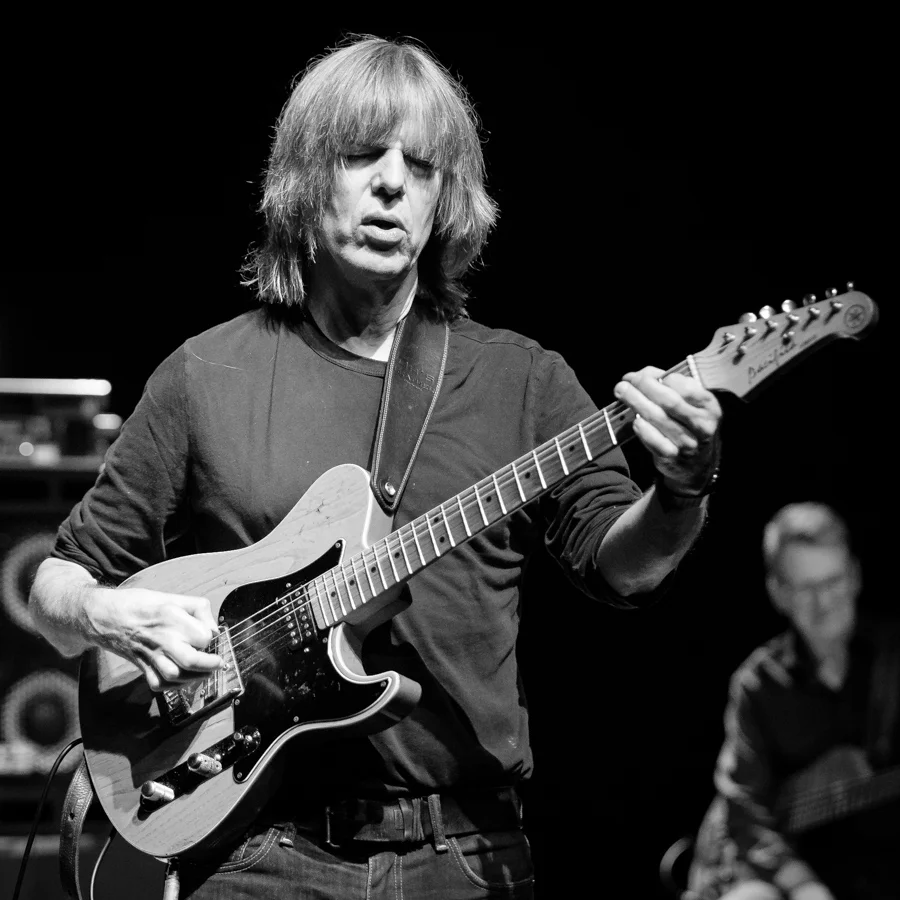
Mike Stern — £2,500 · Premium Tone
The £2,500 · Premium build for Mike Stern's soulful and deeply expressive sound opens with Fender Player Stratocaster — the tonal foundation that defines the character. Into Marshall DSL100H paired with King Tone Duellist OD, the rig comes to ~£2497 and delivers the essential elements. Mike Stern came to prominence in Miles Davis's electric band of the early 1980s and has remained one of the most exciting jazz-rock fusion guitarists working — combining bebop harmonic vocabulary with rock-driven blues phrasing and a distinctively gritty, amplified tone.
Build Mike Stern's £2,500 · Premium Rig
3 pieces · Total ~$3,171
What guitar does Stern use?
Stern is primarily associated with strat style guitars. At a £2,500 budget, Fender Player Stratocaster delivers the essential tonal character.
What to Buy
£2,500 · Premium — Complete Gear List
Why This Rig Works
How Mike Stern's gear choices create the signature tone
Fender Player Stratocaster
Where the Squier approximates the Strat voice, the Player Strat *is* the Strat voice. Noticeably more articulate and dynamic, responding to every nuance of pick attack.
King Tone Duellist OD
King Tone Duellist OD — overdrive coloring added to the signal.
Marshall DSL100H
The Marshall DSL100H converts the guitar signal into audible sound and adds its own tonal character — EQ shaping, natural gain, and the overall feel of the final tone.
The Combined Tone
Mike Stern's tone is immediately recognisable: a Yamaha SA2000 semi-hollow (or Fender Telecaster in later years) running through a Boss DS-1 distortion for his lead sound, adding grit and sustain on top of a clean Fender amp. He also uses a Boss CE-1 chorus for a shimmering clean rhythm tone. The combination gives him two distinct voices: a thick, slightly overdriven lead sound with jazz-scale runs flying over the top, and a warm, chorused clean tone for comping. His technique is completely jazz-derived — altered dominant runs, bebop clichés played at rock speed — but the tone is grittier than any jazz purist would allow.
Tone Tips
Getting the Sound Right
- The Marshall DSL100H delivers power-tube saturation at master volume 6–7 — this compression and sag is what separates amp-driven tone from pedal tone. Set the master first, then dial back the channel gain to taste rather than the other way around.
- Set the DS-1 with tone at 12 o'clock and drive at 10–11 o'clock for a crunchy but articulate jazz-rock tone
- Use a CE-1-style chorus on clean tones for the classic Stern shimmer
- Study 'Odds or Evens' from the first solo album for the Jaco-influenced bass-register lines — Stern's rhythm playing extends into bass-register chord voicings that imply low-end harmonic information beyond what the guitar is physically doing in standard mid-register territory
- Miles Davis's influence on Stern is primarily about space and brevity — Davis required his sidemen to play less and leave space. In Stern's playing this shows as very short phrases (often just 3-5 notes) followed by significant rests, then the next phrase beginning in a different register
- Wide-interval leaps within scale phrases create the dramatic contour — rather than scalar stepwise motion, Stern uses fifths, sixths, and sevenths to jump register within a single phrase. Practice any scale by playing the notes in non-adjacent order rather than sequentially up and down
- The amp volume should be high enough for the guitar to feedback slightly on sustained notes — Stern's sustain relies partly on room acoustics reinforcing the guitar at performance volume. At bedroom levels, use a compressor to approximate this, then remove it when playing at volume
Avoid These Pitfalls
Common Mistakes When Chasing This Tone
- Stacking a second overdrive after the TS9 with single coils — the combined mid emphasis of two stacked ODs into single-coil pickups produces a congested, nasal sound that struggles to sit in a mix
- Using a humbucker guitar as a substitute — the quack, string noise, and bright attack of single coils are irreplaceable. No amount of EQ on a humbucker produces the same result.
- Ignoring the guitar volume knob — rolling back to 6-7 is your rhythm setting; 10 is for leads. Most players leave it at 10 and miss the entire dynamic vocabulary.
- Using a humbucker where single coils are needed — the quack, string definition, and high-frequency air of single coils cannot be EQ'd into a humbucker
Budget Alternatives
Same Tone, Different Budget
FAQ
Mike Stern Tone — Common Questions
Stern is primarily associated with strat style guitars. At a £2,500 budget, Fender Player Stratocaster delivers the essential tonal character.
Stern's amp is british crunch voiced — the amp running hot, providing natural tube saturation. At the £2,500 level, Marshall DSL100H is the closest match.
The £2,500 tier uses Stern's actual gear choices or direct equivalents. Total: £2,497. The tonal step up from £1,000 is real but diminishing — worth it for regular performers and studio work.
Stern's essential pedals include Overdrive. At the £2,500 tier: King Tone Duellist OD. Overdrive is the most important pedal — the others add nuance.
Stern's tone is defined by jazz-rock, strat-crunch, aggressive-jazz. The combination of strat guitar and british crunch amp creates a sound that is immediately recognisable.
Stern's gain approach is amp-driven — natural tube saturation from pushing the amp hard, not from distortion pedals. At £2,500, this is replicated through Marshall DSL100H paired with King Tone Duellist OD.
Mike Stern — £2,500 · Premium Complete Rig
~£2497Guitar
Fender Player Stratocaster
Overdrive
King Tone Duellist OD
Amp
Marshall DSL100H
Tone Match
Closest Real-World Tone Match
If you like Mike Stern's tone, these players use a similar approach — same gear philosophy, comparable sound characteristics.
Related Tones