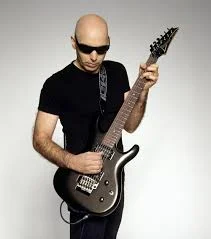
Sound Like Joe Satriani
Joe Satriani is one of the most recognisable voices in rock — a powerful and driving player who shaped the sound of the decade of guitar virtuosity and arena rock. Joe Satriani defined the vocabulary of modern instrumental rock guitar — legato, harmonics, whammy bar and a Lydian modal sensibility that made technically demanding music emotionally accessible. His Ibanez JS signature guitar and DigiTech Whammy pedal are tools for a compositional approach that treats the guitar like an orchestra. Below are complete rig guides at four budget levels, so you can start building their sound whether you're just starting out or ready to invest in the full setup.
Quick Answer
To sound like Joe Satriani, start with a Ibanez RG421 EX into a Boss Katana 50 MkII.
Tone Analysis
Joe Satriani's Guitar Tone — In Depth
Tone Philosophy
Joe Satriani's approach to guitar is fundamentally pedagogical — he has always thought about technique systematically, which reflects his career as a guitar teacher (his students include Steve Vai, Kirk Hammett, Larry LaLonde, and Kevin Robitaille). This systematic approach extends to his tone: every element of his setup is chosen to support a specific technical and musical goal, and he has studied the physics of guitar tone more rigorously than almost any other popular guitarist.
The Signature Sound
The Surfing with the Alien tone — the title track's opening riff, Flying in a Blue Dream, Always with Me Always with You — is an Ibanez JS (Joe Satriani signature) guitar through a Marshall or Mesa/Boogie amplifier with a Marshall Power Brake attenuator for power-amp saturation at controllable volume. The DiMarzio Fred and PAF Pro pickups are crucial to the warm but articulate distortion quality. His legato technique produces smoothly connected phrases at high speed.
Key Gear
The Ibanez JS series (which he helped design) has been his primary instrument since the late 1980s. His amplifiers have included Marshall JVMs and Mesa/Boogie Mark series. A Vox Satchurator overdrive pedal and a DigiTech Whammy appear in his setup.
Playing Approach
Satriani's technique is characterised by efficient motion — his pick strokes are small and precise, his left-hand position is optimised for minimum movement, and his legato phrasing emphasises evenness of dynamics rather than alternating loud and soft notes. This efficiency allows speed that appears effortless from outside.
Legacy
Surfing with the Alien (1987) is the best-selling instrumental guitar album in history. As a teacher, Satriani's influence extends through his students to the mainstream of both rock and metal guitar. G3 has exposed guitar playing to concert audiences who might not have sought out instrumental guitar music independently.
Budget Comparison
Pick Your Budget Level
£1,000 · Pro-Level
~£975
- GuitarJackson JS22 DKA Dinky
- WahWilson Effects MkII Wah
- OverdriveBoss SD-1 Super Overdrive
- AmpBoss Katana 100 MkII
- DelayBoss DD-3T Digital Delay
£2,500 · Premium
~£2444
- GuitarIbanez RG550 Genesis Collection
- WahWilson Effects MkII Wah
- OverdriveFulltone OCD Overdrive
- AmpMarshall DSL40CR
- DelayBoss DD-3T Digital Delay
- ReverbStrymon Flint
Shop Now
Buy the Key Gear — £500 Sweet Spot
Guitar, amp and essential effects for the authentic Joe Satriani sound. The guitar and amp together account for 80% of the tone.
Complete the Rig
Essentials Every Guitarist Needs
These aren't exciting — but every rig needs them. Buy once, sorted forever.
Tone Profile
Joe Satriani's Sound
Ibanez JS (single humbucker, floating trem) into a Marshall JVM or Mesa Boogie Mark IV. High gain but very controlled — Satriani's tone is smooth and singing rather than chaotic. The DigiTech Whammy adds octave effects and divebombs; controlled legato technique produces the fluid, effortless phrasing.
Modeling Amps
Get Joe Satriani's Tone on Your Modeler
Targeting Marshall (Plexi / JCM800). Use these amp models and IRs as your starting point — dial in from there using the knob settings above.
Low master, drive at 6–7 for Plexi crunch; Brit 2204 for JCM800 lead
Keep presence at 5, let the amp breathe — avoid over-EQing
Song Match
Which Joe Satriani Songs Suit Your Amp
Tone Match
Closest Real-World Tone Match
If you like Joe Satriani's tone, these players use a similar approach — same gear philosophy, comparable sound characteristics.
Weekly Tone Tips
One setting, one artist insight, one gear pick. No noise.