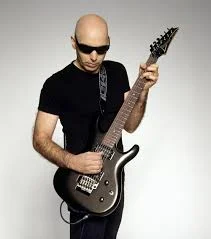
Joe Satriani — £2,500 · Premium Tone
Joe Satriani's powerful and driving tone took shape during the decade of guitar virtuosity and arena rock and remains one of the most sought-after sounds on guitar. Joe Satriani defined the vocabulary of modern instrumental rock guitar — legato, harmonics, whammy bar and a Lydian modal sensibility that made technically demanding music emotionally accessible. His Ibanez JS signature guitar and DigiTech Whammy pedal are tools for a compositional approach that treats the guitar like an orchestra. At the £2,500 · Premium mark — a premium build targeting the most accurate recreation possible — the build centres on a Ibanez RG550 Genesis Collection running through a Marshall DSL40CR, with Wilson Effects MkII Wah and Fulltone OCD Overdrive completing the signal chain, totalling ~£2444.
Build Joe Satriani's £2,500 · Premium Rig
6 pieces · Total ~$3,104
What guitar does Joe Satriani use?
Joe Satriani is primarily associated with superstrat style guitars. At a £2,500 budget, Ibanez RG550 Genesis Collection delivers the essential tonal character.
What to Buy
£2,500 · Premium — Complete Gear List
Can't find one? See alternatives:
Why This Rig Works
How Joe Satriani's gear choices create the signature tone
Ibanez RG550 Genesis Collection
The Ibanez RG550 Genesis Collection provides the tonal foundation for the entire rig — its character shapes everything that follows.
- WahWilson Effects MkII Wah
- OverdriveFulltone OCD Overdrive
- DelayBoss DD-3T Digital Delay
- ReverbStrymon Flint
Marshall DSL40CR
The Marshall DSL40CR converts the guitar signal into audible sound and adds its own tonal character — EQ shaping, natural gain, and the overall feel of the final tone.
The Combined Tone
Ibanez JS (single humbucker, floating trem) into a Marshall JVM or Mesa Boogie Mark IV. High gain but very controlled — Satriani's tone is smooth and singing rather than chaotic. The DigiTech Whammy adds octave effects and divebombs; controlled legato technique produces the fluid, effortless phrasing.
Tone Tips
Getting the Sound Right
- The Marshall DSL40CR delivers power-tube saturation at master volume 6–7 — this compression and sag is what separates amp-driven tone from pedal tone. Set the master first, then dial back the channel gain to taste rather than the other way around.
- Legato technique: hammer-ons and pull-offs with consistent velocity — every note equally loud
- DigiTech Whammy set to 1 octave up for dive bombs and pitch-shifted leads
- Study "Surfing With The Alien" and "Always With Me, Always With You" for the full range
- The Lydian mode (#4) that Satriani favours sounds most distinctive over a static major chord — practise playing Lydian over a single-chord drone before applying it to chord progressions, as the raised 4th creates the dreamy, suspended quality that defines tracks like "Flying in a Blue Dream"
- Satriani's legato technique requires that all notes be at equal volume — hammer-ons are often quieter than picked notes for most players, which breaks the melodic line. Practise single-string legato runs slowly with a volume meter until every note is within 3dB of the picked attack
- The whammy bar's resting position matters for Satriani's tone — he floats the bar under his palm during playing so it's available without a conscious reach; practise keeping the bar accessible at all times rather than reaching for it only when needed, as the spontaneity of its use is part of his expressive vocabulary
Avoid These Pitfalls
Common Mistakes When Chasing This Tone
- Running the Marshall DSL's gain channel at maximum — above 8 on most high-gain channels, palm mutes lose note separation and become an indistinct wall. The target is the minimum gain for the target saturation, not maximum
- Leaving the wah pedal engaged but stationary between rocking it — a cocked wah (fixed position, not moving) acts as a midrange filter that changes the core tone. Either rock it expressively or bypass it completely; a cocked wah changes the sound in ways that are often unintended
- Leaving the wah in a fixed position (cocked) between uses — a cocked wah acts as a midrange filter and changes the tone. If not using the wah expressively, take it out of the chain.
- Too many repeats at high mix — more than 3 repeats makes the delay effect accumulate and overwhelm the dry guitar signal. Keep it to 2-3 repeats at a subtle mix level.
- Setting gain to maximum — above 8 on most amp channels, note separation degrades and riffs lose definition. The loudness feels greater but the clarity goes down.
Budget Alternatives
Same Tone, Different Budget
FAQ
Joe Satriani Tone — Common Questions
Joe Satriani is primarily associated with superstrat style guitars. At a £2,500 budget, Ibanez RG550 Genesis Collection delivers the essential tonal character.
Joe Satriani's amp is british crunch voiced — high-gain with significant distortion from the amp itself. At the £2,500 level, Marshall DSL40CR is the closest match.
The £2,500 tier uses Joe Satriani's actual gear choices or direct equivalents. Total: £2,444. The tonal step up from £1,000 is real but diminishing — worth it for regular performers and studio work.
Joe Satriani's essential pedals include Wah, Delay, Reverb. At the £2,500 tier: Wilson Effects MkII Wah, Fulltone OCD Overdrive, Boss DD-3T Digital Delay. Wah is the most important pedal — the others add nuance.
Joe Satriani's tone is defined by smooth, legato, singing. The combination of superstrat guitar and british crunch amp creates a sound that is immediately recognisable.
Joe Satriani's gain approach is high-gain — dedicated high-gain amp channels or heavy drive pedals with significant distortion. At £2,500, this is replicated through Marshall DSL40CR paired with Wilson Effects MkII Wah.
Joe Satriani — £2,500 · Premium Complete Rig
~£2444Guitar
Ibanez RG550 Genesis Collection
Wah
Wilson Effects MkII Wah
Overdrive
Fulltone OCD Overdrive
Amp
Marshall DSL40CR
Delay
Boss DD-3T Digital Delay
Reverb
Strymon Flint
Tone Match
Closest Real-World Tone Match
If you like Joe Satriani's tone, these players use a similar approach — same gear philosophy, comparable sound characteristics.
Related Tones