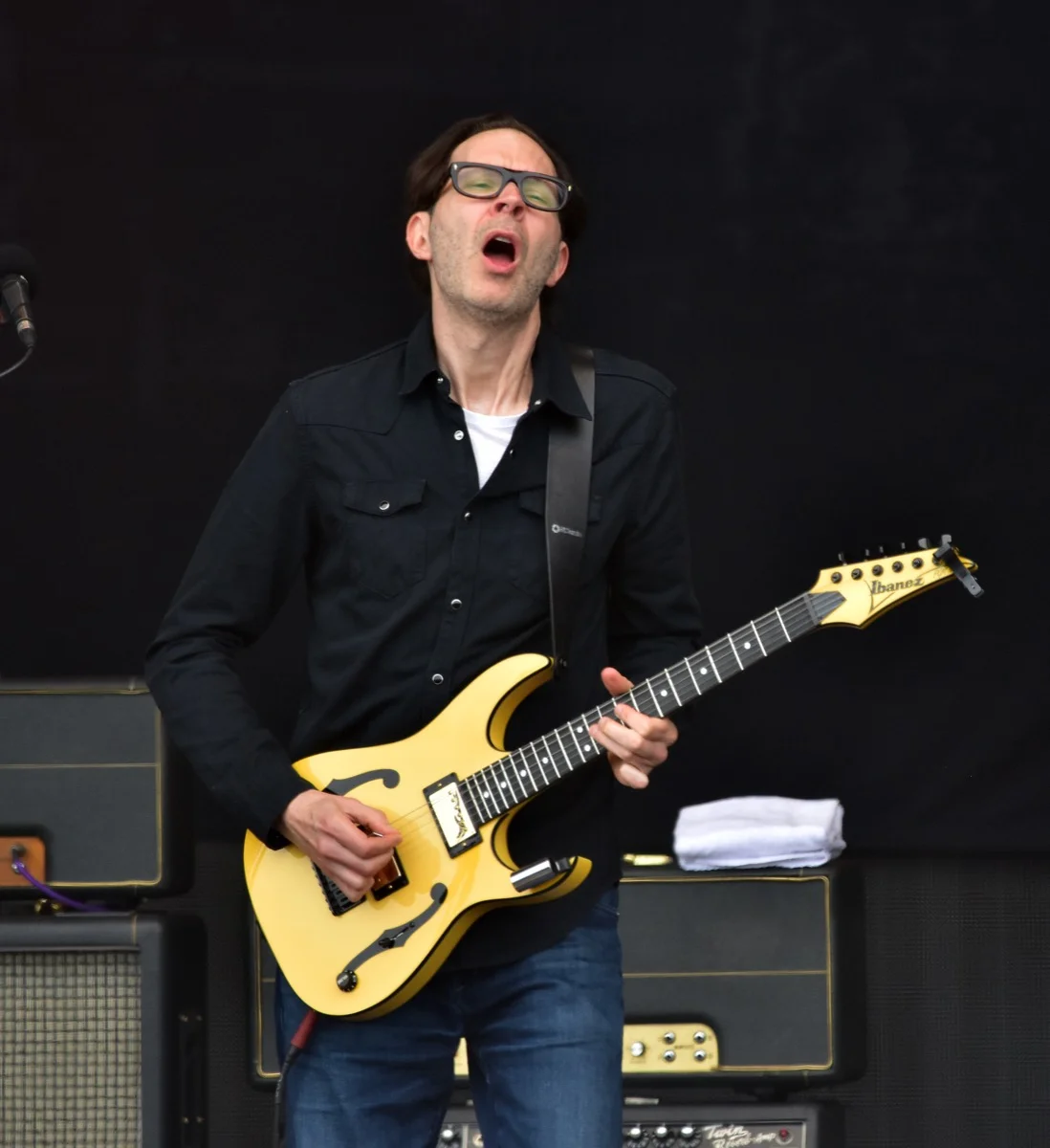
Paul Gilbert — £2,500 · Premium Tone
Paul Gilbert of Mr. Big and Racer X is the pinnacle of discipline-based shred — his technique is the product of thousands of hours of deliberate, methodical practice rather than natural talent. He emphasises the importance of economy and precision over raw speed. Replicating that crushing and technically demanding sound at the £2,500 · Premium mark means Ibanez RG550 Genesis Collection into Marshall DSL40CR. The effects — Boss GE-7 Graphic EQ, King Tone Duellist OD — add the finishing texture. This build totals ~£2475 and captures the core character — a premium build targeting the most accurate recreation possible.
Build Paul Gilbert's £2,500 · Premium Rig
5 pieces · Total ~$3,143
What guitar does Paul Gilbert use?
Paul Gilbert is primarily associated with superstrat style guitars. At a £2,500 budget, Ibanez RG550 Genesis Collection delivers the essential tonal character.
What to Buy
£2,500 · Premium — Complete Gear List
Can't find one? See alternatives:
Why This Rig Works
How Paul Gilbert's gear choices create the signature tone
Ibanez RG550 Genesis Collection
The Ibanez RG550 Genesis Collection provides the tonal foundation for the entire rig — its character shapes everything that follows.
- EQBoss GE-7 Graphic EQ
- OverdriveKing Tone Duellist OD
- DelayStrymon Timeline
Marshall DSL40CR
The Marshall DSL40CR converts the guitar signal into audible sound and adds its own tonal character — EQ shaping, natural gain, and the overall feel of the final tone.
The Combined Tone
Ibanez PGM signature (DiMarzio pickups) into a Mesa Boogie Mark series or Laney amp. The tone is full and mid-present, not scooped. A noise gate keeps the signal clean during rests. DigiTech Whammy for the extreme pitch effects. The overall sound is warm and singing, not harsh.
Tone Tips
Getting the Sound Right
- The Marshall DSL40CR delivers power-tube saturation at master volume 6–7 — this compression and sag is what separates amp-driven tone from pedal tone. Set the master first, then dial back the channel gain to taste rather than the other way around.
- Start every technique at 50% of your target speed — if the mechanics are clean at slow tempos, speed comes automatically. Speed practice at tempo is wasted practice
- Alternate picking is the foundation — every note is picked with strict down-up-down-up unless an open string or position shift makes economy picking necessary
- Video record your practice — Gilbert has always advocated watching your own technique to identify inefficiencies invisible to the player
- Practise the "Paul Gilbert lick" (a repeating 4-note sequence with position shifts on every beat) at slow tempos until the string crossing and position change are invisible — this lick is a technical exercise disguised as a musical phrase and reveals immediately whether picking mechanics are clean under pressure
- Use a drum loop or click track on every practice session — Gilbert's note choices only make sense within a rhythmic framework; playing scales freely is not the same as playing them in musical time, and the discipline of playing to a click is fundamental to his approach
- Understand that technique serves melody, not the other way around — despite his formidable speed, Gilbert's solos are melodically strong and could be sung. If a fast run doesn't have a melodic purpose, it's not worth including
Avoid These Pitfalls
Common Mistakes When Chasing This Tone
- Running the Marshall DSL's gain channel at maximum — above 8 on most high-gain channels, palm mutes lose note separation and become an indistinct wall. The target is the minimum gain for the target saturation, not maximum
- Setting amp gain to maximum — superstrats with high-output humbuckers already drive the amp aggressively. Gain at 8-9 into a high-gain channel gives muddy intermodulation, not more power.
- Too many repeats at high mix — more than 3 repeats makes the delay effect accumulate and overwhelm the dry guitar signal. Keep it to 2-3 repeats at a subtle mix level.
- Running gain at maximum — above 8 on most high-gain channels, palm mutes become indistinct and individual notes blur. The right amount of gain is the minimum for the target saturation.
- Scooping mids to "sound heavier" — a guitar with mids removed disappears under bass and drums. Metal tone cuts through a mix, and that requires midrange.
Budget Alternatives
Same Tone, Different Budget
FAQ
Paul Gilbert Tone — Common Questions
Paul Gilbert is primarily associated with superstrat style guitars. At a £2,500 budget, Ibanez RG550 Genesis Collection delivers the essential tonal character.
Paul Gilbert's amp is high gain voiced — the amp running hot, providing natural tube saturation. At the £2,500 level, Marshall DSL40CR is the closest match.
The £2,500 tier uses Paul Gilbert's actual gear choices or direct equivalents. Total: £2,475. The tonal step up from £1,000 is real but diminishing — worth it for regular performers and studio work.
Paul Gilbert's essential pedals include Overdrive, Delay. At the £2,500 tier: Boss GE-7 Graphic EQ, King Tone Duellist OD, Strymon Timeline. Overdrive is the most important pedal — the others add nuance.
Paul Gilbert's tone is defined by alternate-picking, precise, melodic. The combination of superstrat guitar and high gain amp creates a sound that is immediately recognisable.
Paul Gilbert's gain approach is amp-driven — natural tube saturation from pushing the amp hard, not from distortion pedals. At £2,500, this is replicated through Marshall DSL40CR paired with Boss GE-7 Graphic EQ.
Paul Gilbert — £2,500 · Premium Complete Rig
~£2475Guitar
Ibanez RG550 Genesis Collection
EQ
Boss GE-7 Graphic EQ
Overdrive
King Tone Duellist OD
Amp
Marshall DSL40CR
Delay
Strymon Timeline
Tone Match
Closest Real-World Tone Match
If you like Paul Gilbert's tone, these players use a similar approach — same gear philosophy, comparable sound characteristics.
Related Tones