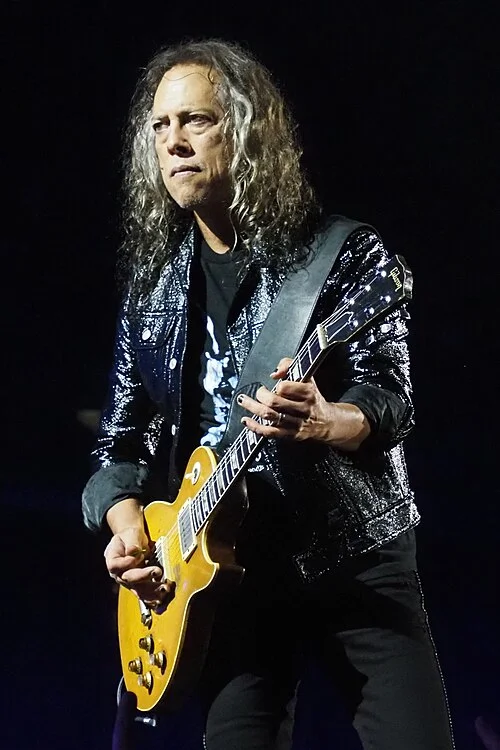
Sound Like Kirk Hammett
Kirk Hammett stands as one of heavy metal's most enduring tonal references — aggressive and precise by nature and endlessly studied. Kirk Hammett defined the lead guitar vocabulary of thrash metal — wah-soaked pentatonic runs, Mesa Boogie high gain and a sense of drama in every solo. His KH-2 signature ESP through a Dual Rectifier is the template for aggressive, expressive metal lead playing. These complete rig guides at four budget levels show exactly what gear it takes to get there.
Quick Answer
To sound like Kirk Hammett, start with a Jackson JS22 Dinky into a Boss Katana 50 MkII, with a Dunlop GCB95 Cry Baby Wah as your key effect.
Tone Analysis
Kirk Hammett's Guitar Tone — In Depth
Tone Philosophy
Kirk Hammett brought a specific combination of influences to Metallica — San Francisco underground metal, British NWOBHM, the chromatic aggression of Dave Mustaine's rhythm approach — and synthesised them with his own wah pedal obsession and James Burton/B.B. King melodic sensibility in lead playing. His role in Metallica is as much about supporting James Hetfield's rhythm guitar as about lead work; the interplay between the two is the band's defining structural feature.
The Signature Sound
The Metallica tone from Master of Puppets through the Black Album is a Gibson Flying V or ESP KH-series guitar through a Mesa/Boogie Mark IIC+ or a custom-modified Marshall, with a Boss MT-2 Metal Zone or Ibanez Tube Screamer as an additional gain source. The lead tone adds a Dunlop Cry Baby wah — Hammett is one of the most wah-intensive lead players in metal, using it both as a filter effect and as an envelope follower for specific solo passages.
Key Gear
His signature ESP KH-series guitars with EMG 81/60 active pickups are the primary live instruments. Mesa/Boogie amplifiers have been central to Metallica's tone. The Dunlop KH95 signature wah is a significant element of his lead sound. Various Boss and MXR pedals appear in his setup.
Playing Approach
Hammett studied with Joe Satriani in the early 1980s, which accounts for the technical facility he brings to lead playing. His left-hand legato technique and pick-hand efficiency reflect Satriani's systematic approach to technique. His wah phrasing is distinctive and immediately recognisable.
Legacy
Metallica's commercial success and critical influence made Hammett's playing the default reference for a generation of metal lead guitarists. His combination of technical mastery and commercial accessibility defined what mainstream metal lead guitar sounded like through the 1990s.
Budget Comparison
Pick Your Budget Level
£500 · Sweet Spot
~£592
- GuitarJackson JS22 Dinky
- AmpBoss Katana 50 MkII
- WahDunlop GCB95 Cry Baby Wah
- DistortionBoss DS-1 Distortion
£1,000 · Pro-Level
~£946
- GuitarJackson JS32 Dinky
- AmpMarshall DSL40CR
- WahDunlop GCB95 Cry Baby Wah
- DelayBoss DD-3T Digital Delay
£2,500 · Premium
~£2475
- GuitarIbanez Prestige RG5121
- WahDunlop GCB95 Cry Baby Wah
- EQMXR M108S 10-Band EQ
- AmpMarshall DSL40CR
- DelayBoss DD-3T Digital Delay
Shop Now
Buy the Key Gear — £500 Sweet Spot
Guitar, amp and essential effects for the authentic Kirk Hammett sound. The guitar and amp together account for 80% of the tone.
Complete the Rig
Essentials Every Guitarist Needs
These aren't exciting — but every rig needs them. Buy once, sorted forever.
Tone Profile
Kirk Hammett's Sound
ESP KH-2 (EMG 81/60 pickups) into a Mesa Boogie Dual Rectifier. The Dunlop Kirk Hammett Signature Cry Baby wah is almost always in use — Hammett uses it as a tone-shaping filter on rhythm parts and for the characteristic wah-drenched solos. Very high gain, smooth sustain from the EMGs.
Modeling Amps
Get Kirk Hammett's Tone on Your Modeler
Targeting Mesa/Boogie (Dual Rectifier / Mark series). Use these amp models and IRs as your starting point — dial in from there using the knob settings above.
Cali Rectifire Modern for modern heavy; Ch1 for clean/crunch
Bass at 7+, treble restrained — Mesa preamp is very active
Song Match
Which Kirk Hammett Songs Suit Your Amp
Tone Match
Closest Real-World Tone Match
If you like Kirk Hammett's tone, these players use a similar approach — same gear philosophy, comparable sound characteristics.
Weekly Tone Tips
One setting, one artist insight, one gear pick. No noise.