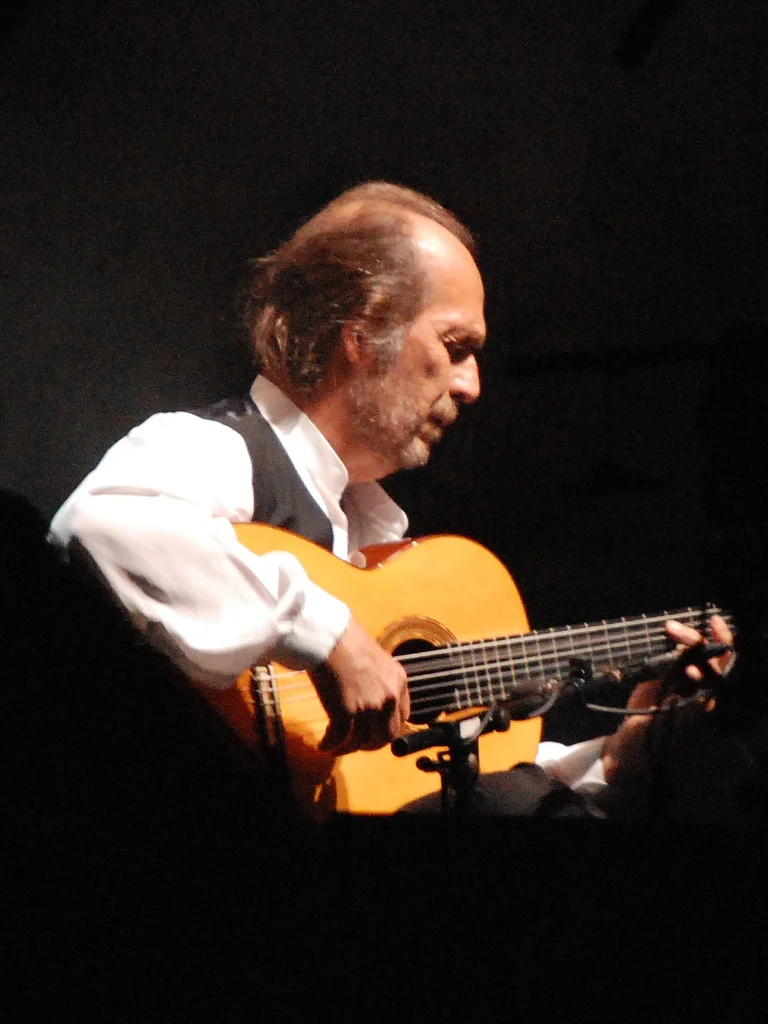
Sound Like Paco de Lucía
Paco de Lucía stands as one of flamenco's most enduring tonal references — passionate and percussively expressive by nature and endlessly studied. Paco de Lucía was the greatest flamenco guitarist of the 20th century — bringing the traditional Andalusian art form to international concert halls, collaborating with John McLaughlin and Al Di Meola, and developing a speed and precision on nylon string guitar never seen before. These complete rig guides at four budget levels show exactly what gear it takes to get there.
Quick Answer
To sound like Paco de Lucía, start with a Yamaha LL6 ARE Acoustic Guitar into a suitable amp.
Tone Analysis
Paco de Lucía's Guitar Tone — In Depth
Tone Philosophy
Paco de Lucia is the most important figure in the modernisation of flamenco guitar — he brought jazz harmony, Brazilian bossa nova, and classical guitar technique into flamenco without diminishing its Andalusian essence. His speed, precision, and the specific textures of his right-hand rasgueado and picado techniques are the standard against which all subsequent flamenco players are measured.
The Signature Sound
De Lucia's tone is entirely acoustic — a cypress-body flamenco guitar with a golpeador (tap plate) protecting the top from the rasgueado and golpe strokes. The flamenco guitar's lower action, cypress back and sides, and cedar top produce a brighter, more percussive tone than classical guitar. It is played without amplification in the traditional context; live performances may use a microphone.
Key Gear
His guitars were built primarily by Antonio Marin Montero in Granada. The flamenco guitar (lighter construction than classical, with tap plate) is the defining instrument. Nylon strings of medium tension.
Playing Approach
De Lucia's technique encompasses every flamenco hand technique — rasgueado (rolling finger strums), picado (single-note scale passages), alzapua (thumb technique for bass), tremolo (PAMI pattern for sustained melody) — executed at speeds and with the musical intelligence of a world-class improviser.
Legacy
Friday Night in San Francisco (with Al Di Meola and John McLaughlin) is one of the best-selling guitar albums in history. De Lucia brought flamenco guitar to a global jazz and classical audience, confirming its place among the world's great instrumental traditions.
Budget Comparison
Pick Your Budget Level
Shop Now
Buy the Key Gear — £500 Sweet Spot
Guitar, amp and essential effects for the authentic Paco de Lucía sound. The guitar and amp together account for 80% of the tone.
Complete the Rig
Essentials Every Guitarist Needs
These aren't exciting — but every rig needs them. Buy once, sorted forever.
Tone Profile
Paco de Lucía's Sound
Handmade Spanish flamenco guitar (cypress/spruce, blanca) played acoustically or with very light amplification. The tone is dry, percussive and nasal compared to a classical guitar — the cypress back and sides give flamenco guitars a brighter, more immediate sound. No sustain pedals, no amplification effects.
Modeling Amps
Get Paco de Lucía's Tone on Your Modeler
Targeting Clean + Overdrive rig. Use these amp models and IRs as your starting point — dial in from there using the knob settings above.
Adjust presence and master to taste for this artist's era
Use Fractal's Tone Match feature against reference tracks for accuracy
Song Match
Which Paco de Lucía Songs Suit Your Amp
Tone Match
Closest Real-World Tone Match
If you like Paco de Lucía's tone, these players use a similar approach — same gear philosophy, comparable sound characteristics.
Weekly Tone Tips
One setting, one artist insight, one gear pick. No noise.