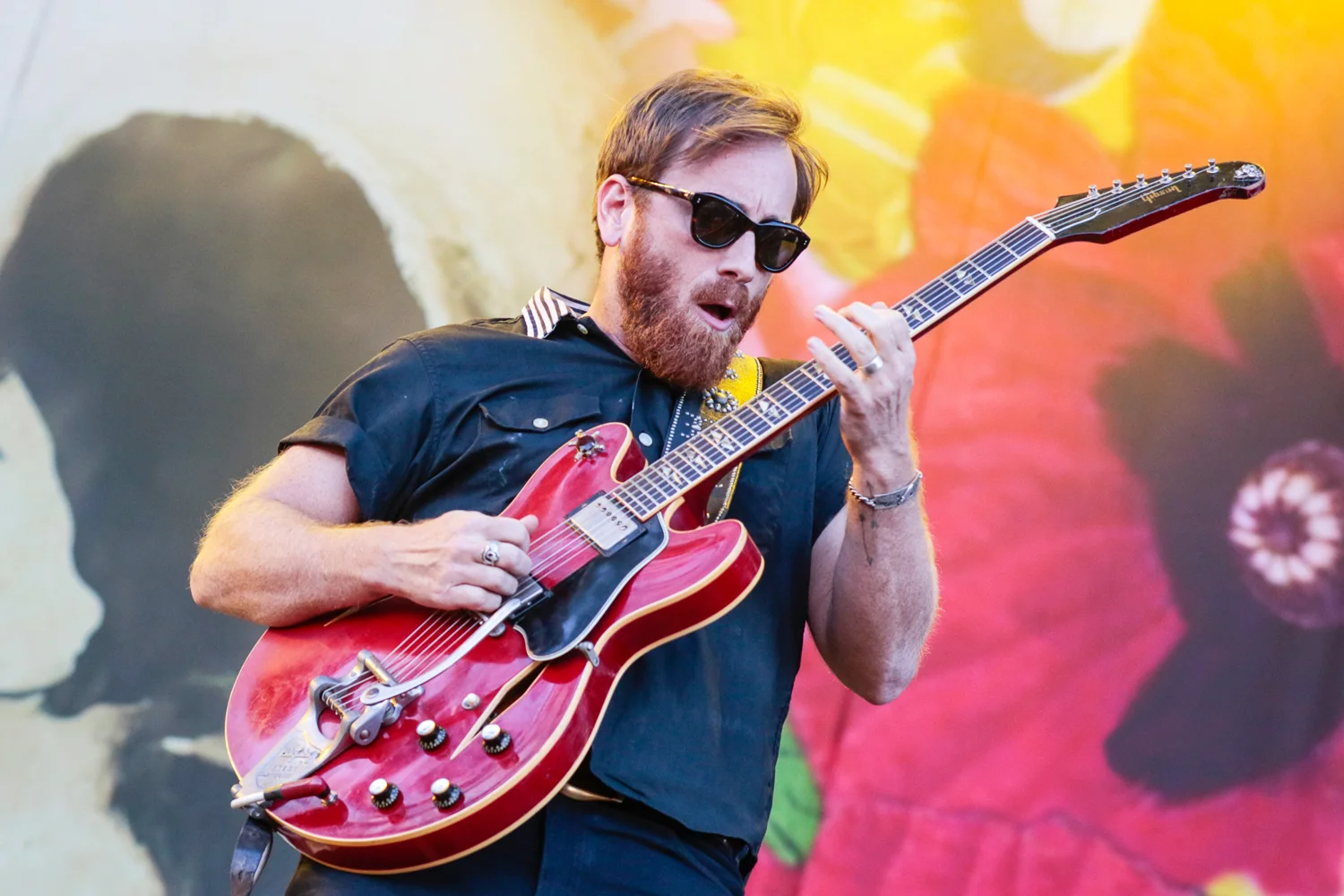
Dan Auerbach — £1,000 · Pro-Level Tone
At £1,000 · Pro-Level, Dan Auerbach's raw and emotionally charged tone is more accessible than most players expect. Rooted in a period of genre-blending and sonic exploration, their sound — Dan Auerbach of The Black Keys proved that two people and a deliberately lo-fi approach could produce some of the most compelling blues-rock of the 2000s — Harmony or Silvertone guitars through broken-down Fender amps, overdriven and raw. — starts with Epiphone ES-335 and Fender Blues Junior IV, totalling ~£1,047. That combination captures the defining characteristics without the premium price tag.
Build Dan Auerbach's £1,000 · Pro-Level Rig
3 pieces · Total ~$1,228
What guitar does Dan Auerbach use?
Dan Auerbach is primarily associated with semi hollow style guitars. At a £1,000 budget, Epiphone ES-335 delivers the essential tonal character.
What to Buy
£1,000 · Pro-Level — Complete Gear List
Can't find one? See alternatives:
Why This Rig Works
How Dan Auerbach's gear choices create the signature tone
Epiphone ES-335
The Epiphone ES-335 provides the tonal foundation for the entire rig — its character shapes everything that follows.
Boss BD-2 Blues Driver
Boss BD-2 Blues Driver — overdrive coloring added to the signal.
Fender Blues Junior IV
This is where the magic happens for Mayer and SRV tones. The EL84 power section breaks up beautifully when pushed, and the bright, clean headroom is exactly what Tube Screamer boost tones are built on.
The Combined Tone
Harmony or Silvertone hollow-body guitar through a vintage Fender or National amp, often intentionally overloaded for a blown-out quality. The tone is raw and compressed — everything sounds like it might fall apart but doesn't. Slide guitar in open D or standard tuning adds additional texture.
Tone Tips
Getting the Sound Right
- The Fender Blues Junior IV stays cleaner longer than a Marshall-style amp — push it with a low-gain overdrive (gain at 2–3, level up) rather than cranking its own gain. Set treble at 6, bass at 4, and let the guitar's volume knob handle the dynamics.
- Lo-fi is deliberate, not accidental — Auerbach chose the Harmony and Silvertone specifically because of their limitations, not despite them
- Budget guitar + overdriven amp is the formula — do not spend money on an expensive guitar. A cheap hollow-body into a pushed amp will capture the essence
- Simple blues chord progressions — I-IV-V, 12-bar blues. The sophistication is in the execution and feel, not the harmonic complexity
- Double-stop thirds and sixths are signature phrases — Auerbach frequently plays two strings simultaneously in parallel thirds or sixths
- Raw, imprecise vibrato is part of the character — unlike precise classical vibrato, Black Keys vibrato is rough and variable
- White Stripes and Black Keys both prove that less gear equals more tone — the absence of a bass guitar forces the guitar to cover more sonic territory
Avoid These Pitfalls
Common Mistakes When Chasing This Tone
- Running the Big Muff into an already-driven amp channel — fuzz into a driven amp creates uncontrolled intermodulation that sounds chaotic rather than musical. The Big Muff works best into a clean or barely-clean amp
- Setting the Big Muff tone control at noon or above — this position is where the Big Muff's scooped mid character becomes harsh and cutting. The musical range is 9 o'clock to 11 o'clock on most units
- Playing at bedroom volume expecting amp-driven tone — the power-tube saturation that defines this gain structure only occurs when the amp is working at substantial output. This is not replicable at low volumes.
- Expecting consistent performance from a germanium fuzz in cold conditions — germanium transistors are temperature sensitive. The bias point shifts significantly in cold weather.
- Setting gain too high on the overdrive pedal — most overdrive pedals are most useful at gain settings of 2-5, where they add character without dominating the tone. High gain settings on an OD pedal become a distortion, not an overdrive.
Budget Alternatives
Same Tone, Different Budget
FAQ
Dan Auerbach Tone — Common Questions
Dan Auerbach is primarily associated with semi hollow style guitars. At a £1,000 budget, Epiphone ES-335 delivers the essential tonal character.
Dan Auerbach's amp is vintage blues voiced — the amp running hot, providing natural tube saturation. At the £1,000 level, Fender Blues Junior IV is the closest match.
The £1,000 tier adds noticeably better build quality and tonal nuance over the £500 rig. This build totals £967 with Epiphone ES-335, Fender Blues Junior IV, 1 effect. This is the tier where the tone becomes genuinely convincing for gigging and recording.
Dan Auerbach's essential pedals include Fuzz, Overdrive, Reverb. At the £1,000 tier: Boss BD-2 Blues Driver. Fuzz is the most important pedal — the others add nuance.
Dan Auerbach's tone is defined by raw, lo-fi, garage-blues. The combination of semi hollow guitar and vintage blues amp creates a sound that is immediately recognisable.
Dan Auerbach's gain approach is amp-driven — natural tube saturation from pushing the amp hard, not from distortion pedals. At £1,000, this is replicated through Fender Blues Junior IV paired with Boss BD-2 Blues Driver.
Dan Auerbach — £1,000 · Pro-Level Complete Rig
~£1,047Guitar
Epiphone ES-335
Amp
Fender Blues Junior IV
Overdrive
Boss BD-2 Blues Driver
Tone Match
Closest Real-World Tone Match
If you like Dan Auerbach's tone, these players use a similar approach — same gear philosophy, comparable sound characteristics.
Related Tones