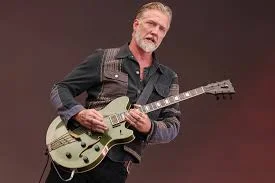
Josh Homme — £1,000 · Pro-Level Tone
The £1,000 · Pro-Level build for Josh Homme's powerful and driving sound opens with Epiphone Les Paul Special — the tonal foundation that defines the character. Into Fender Blues Junior IV paired with Dunlop GCB95 Cry Baby Wah and Analogman Modded TS9, the rig comes to ~£995 and delivers the essential elements. Josh Homme of Queens of the Stone Age creates some of modern rock's most hypnotic, locked-in riffs — baritone-ish tuned-down tones, drone-based single-note riffs, and a commitment to groove that makes QOTSA impossible to stand still to.
Build Josh Homme's £1,000 · Pro-Level Rig
5 pieces · Total ~$1,264
What guitar does Josh Homme use?
Josh Homme is primarily associated with lp style guitars. At a £1,000 budget, Epiphone Les Paul Special delivers the essential tonal character.
What to Buy
£1,000 · Pro-Level — Complete Gear List
Can't find one? See alternatives:
Why This Rig Works
How Josh Homme's gear choices create the signature tone
Epiphone Les Paul Special
The 650R/700T humbucker pair gives instant Les Paul darkness and warmth. They nail the aggressive, mid-forward crunch that hard rock is built on.
- Expression Filtervocal mid-sweep with Fasel resonance
- OverdriveAnalogman Modded TS9
- FuzzDunlop Fuzz Face Mini
Fender Blues Junior IV
This is where the magic happens for Mayer and SRV tones. The EL84 power section breaks up beautifully when pushed, and the bright, clean headroom is exactly what Tube Screamer boost tones are built on.
The Combined Tone
Fender Jazzmaster or Telecaster into an Orange or Ampeg amp, often tuned to C or B standard. The tone is thick and warm rather than aggressive — the heaviness comes from the low tuning and the locked-in groove, not from distortion. A fuzz pedal appears on some tracks for additional harmonic saturation.
Tone Tips
Getting the Sound Right
- The Fender Blues Junior IV stays cleaner longer than a Marshall-style amp — push it with a low-gain overdrive (gain at 2–3, level up) rather than cranking its own gain. Set treble at 6, bass at 4, and let the guitar's volume knob handle the dynamics.
- Tune to C or B standard — QOTSA's heaviness is almost entirely tuning-based. In standard tuning, the same riffs sound thin
- Heavy strings (.12s or .13s) are required for the low tunings to stay in tune and have the right tension and articulation
- The tone is thick and mid-heavy, not bright and aggressive — if it sounds like metal, pull the treble back and boost the mids
- Fuzz is used sparingly and specifically — not on every song. When it appears, it's a sudden surge in harmonic density
- Orange amp at moderate gain — the Orange character provides the warmth without excessive distortion
- Drop C power chords with the first finger barring the bottom two strings produce the "wall of riff" QOTSA chord sound
Avoid These Pitfalls
Common Mistakes When Chasing This Tone
- Stacking a second overdrive after the TS9 with single coils — the combined mid emphasis of two stacked ODs into single-coil pickups produces a congested, nasal sound that struggles to sit in a mix
- Placing a tuner or buffered pedal before the Fuzz Face — most fuzz circuits (especially germanium ones) are sensitive to the impedance of the signal feeding them. A buffered pedal before the fuzz changes how the guitar volume knob responds. Run fuzz first in the chain
- Playing at bedroom volume expecting amp-driven tone — the power-tube saturation that defines this gain structure only occurs when the amp is working at substantial output. This is not replicable at low volumes.
- Setting gain too high on the overdrive pedal — most overdrive pedals are most useful at gain settings of 2-5, where they add character without dominating the tone. High gain settings on an OD pedal become a distortion, not an overdrive.
- Putting fuzz after other pedals (especially wah or overdrive) — most fuzz circuits are sensitive to input impedance. Wah before fuzz is fine; overdrive into fuzz creates unpredictable gating.
Budget Alternatives
Same Tone, Different Budget
FAQ
Josh Homme Tone — Common Questions
Josh Homme is primarily associated with lp style guitars. At a £1,000 budget, Epiphone Les Paul Special delivers the essential tonal character.
Josh Homme's amp is vintage blues voiced — the amp running hot, providing natural tube saturation. At the £1,000 level, Fender Blues Junior IV is the closest match.
The £1,000 tier adds noticeably better build quality and tonal nuance over the £500 rig. This build totals £995 with Epiphone Les Paul Special, Fender Blues Junior IV, 3 effects. This is the tier where the tone becomes genuinely convincing for gigging and recording.
Josh Homme's essential pedals include Overdrive, Fuzz. At the £1,000 tier: Dunlop GCB95 Cry Baby Wah, Analogman Modded TS9, Dunlop Fuzz Face Mini. Overdrive is the most important pedal — the others add nuance.
Josh Homme's tone is defined by qotsa-desert-rock, slinky-heavy, baritone-vibes. The combination of lp guitar and vintage blues amp creates a sound that is immediately recognisable.
Josh Homme's gain approach is amp-driven — natural tube saturation from pushing the amp hard, not from distortion pedals. At £1,000, this is replicated through Fender Blues Junior IV paired with Dunlop GCB95 Cry Baby Wah.
Josh Homme — £1,000 · Pro-Level Complete Rig
~£995Guitar
Epiphone Les Paul Special
Wah
Dunlop GCB95 Cry Baby Wah
Overdrive
Analogman Modded TS9
Fuzz
Dunlop Fuzz Face Mini
Amp
Fender Blues Junior IV
Tone Match
Closest Real-World Tone Match
If you like Josh Homme's tone, these players use a similar approach — same gear philosophy, comparable sound characteristics.
Related Tones