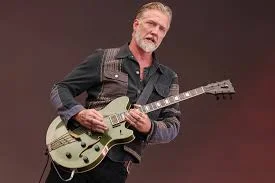
Josh Homme — £500 · Sweet Spot Tone
The £500 · Sweet Spot build for Josh Homme's powerful and driving sound opens with Squier Classic Vibe 70s Stratocaster — the tonal foundation that defines the character. Into Boss Katana 50 MkII paired with Dunlop Fuzz Face Mini, the rig comes to ~£517 and delivers the essential elements. Josh Homme of Queens of the Stone Age creates some of modern rock's most hypnotic, locked-in riffs — baritone-ish tuned-down tones, drone-based single-note riffs, and a commitment to groove that makes QOTSA impossible to stand still to.
Build Josh Homme's £500 · Sweet Spot Rig
3 pieces · Total ~$682
What guitar does Josh Homme use?
Josh Homme is primarily associated with lp style guitars. At a £500 budget, Squier Classic Vibe 70s Stratocaster delivers the essential tonal character.
What to Buy
£500 · Sweet Spot — Complete Gear List
Can't find one? See alternatives:
Why This Rig Works
How Josh Homme's gear choices create the signature tone
Squier Classic Vibe 70s Stratocaster
The Squier Classic Vibe 70s Stratocaster brings bright single-coil clarity and dynamic responsiveness — a versatile foundation that reacts to every nuance of pick attack.
Dunlop Fuzz Face Mini
Dunlop Fuzz Face Mini — fuzz coloring added to the signal.
Boss Katana 50 MkII
Its 'Brown' amp character at low gain is an excellent approximation of the Fender-style clarity that Hendrix, Mayer, Gilmour and SRV all relied on. Built-in effects mean you're a few knob turns away from the right tone.
The Combined Tone
Fender Jazzmaster or Telecaster into an Orange or Ampeg amp, often tuned to C or B standard. The tone is thick and warm rather than aggressive — the heaviness comes from the low tuning and the locked-in groove, not from distortion. A fuzz pedal appears on some tracks for additional harmonic saturation.
Tone Tips
Getting the Sound Right
- On the Boss Katana 50 MkII: use the Brown channel — the closest model to a Marshall-voiced preamp at this price. Set character to 8, gain to 5. For Josh Homme's lead volume jump, use the Boost mode rather than adding a separate boost pedal.
- Tune to C or B standard — QOTSA's heaviness is almost entirely tuning-based. In standard tuning, the same riffs sound thin
- Heavy strings (.12s or .13s) are required for the low tunings to stay in tune and have the right tension and articulation
- The quarter-note feel is paramount — Homme plays very "in the pocket," right on the beat with almost no swing or rush
- Single-note riffs on the low strings with the bass player doubling them is the QOTSA formula — listen to how guitar and bass lock on "No One Knows"
- The tone is thick and mid-heavy, not bright and aggressive — if it sounds like metal, pull the treble back and boost the mids
- Rolling back the guitar's volume knob to 6-7 on a Fuzz Face dramatically changes the tone from full-fuzz to almost-clean — this is a continuous control, not a switch. Explore the full range before reaching for any other settings
- The Fuzz Face's tone control is a mid-scoop filter — set it between 9 and 11 o'clock (slightly dark) to preserve the midrange presence that single coils need to cut through a mix. At noon or higher it gets thin
Avoid These Pitfalls
Common Mistakes When Chasing This Tone
- Stacking a second overdrive after the TS9 with single coils — the combined mid emphasis of two stacked ODs into single-coil pickups produces a congested, nasal sound that struggles to sit in a mix
- Placing a tuner or buffered pedal before the Fuzz Face — most fuzz circuits (especially germanium ones) are sensitive to the impedance of the signal feeding them. A buffered pedal before the fuzz changes how the guitar volume knob responds. Run fuzz first in the chain
- Setting the amp bass too high — the inherent warmth of mahogany means you need less bass EQ than with a Strat. Starting at 5 rather than 7 prevents low-end mud.
- Playing a vintage-voiced amp at low volume — the warmth and bloom of these amps comes from the power tubes working. At low volume the tone is flat and uninspiring compared to the amp's potential.
- Playing at bedroom volume expecting amp-driven tone — the power-tube saturation that defines this gain structure only occurs when the amp is working at substantial output. This is not replicable at low volumes.
Budget Alternatives
Same Tone, Different Budget
FAQ
Josh Homme Tone — Common Questions
Josh Homme is primarily associated with lp style guitars. At a £500 budget, Squier Classic Vibe 70s Stratocaster delivers the essential tonal character.
Josh Homme's amp is vintage blues voiced — the amp running hot, providing natural tube saturation. At the £500 level, Boss Katana 50 MkII is the closest match.
Yes — £500 covers a real guitar and amp in the right tonal family. This rig totals £537 and captures the essential character. The guitar and amp account for 80% of the tone; pedals are secondary at this budget.
Josh Homme's essential pedals include Overdrive, Fuzz. At the £500 tier: Dunlop Fuzz Face Mini. Overdrive is the most important pedal — the others add nuance.
Josh Homme's tone is defined by qotsa-desert-rock, slinky-heavy, baritone-vibes. The combination of lp guitar and vintage blues amp creates a sound that is immediately recognisable.
Josh Homme's gain approach is amp-driven — natural tube saturation from pushing the amp hard, not from distortion pedals. At £500, this is replicated through Boss Katana 50 MkII paired with Dunlop Fuzz Face Mini.
Josh Homme — £500 · Sweet Spot Complete Rig
~£517Guitar
Squier Classic Vibe 70s Stratocaster
Amp
Boss Katana 50 MkII
Fuzz
Dunlop Fuzz Face Mini
Tone Match
Closest Real-World Tone Match
If you like Josh Homme's tone, these players use a similar approach — same gear philosophy, comparable sound characteristics.
Related Tones