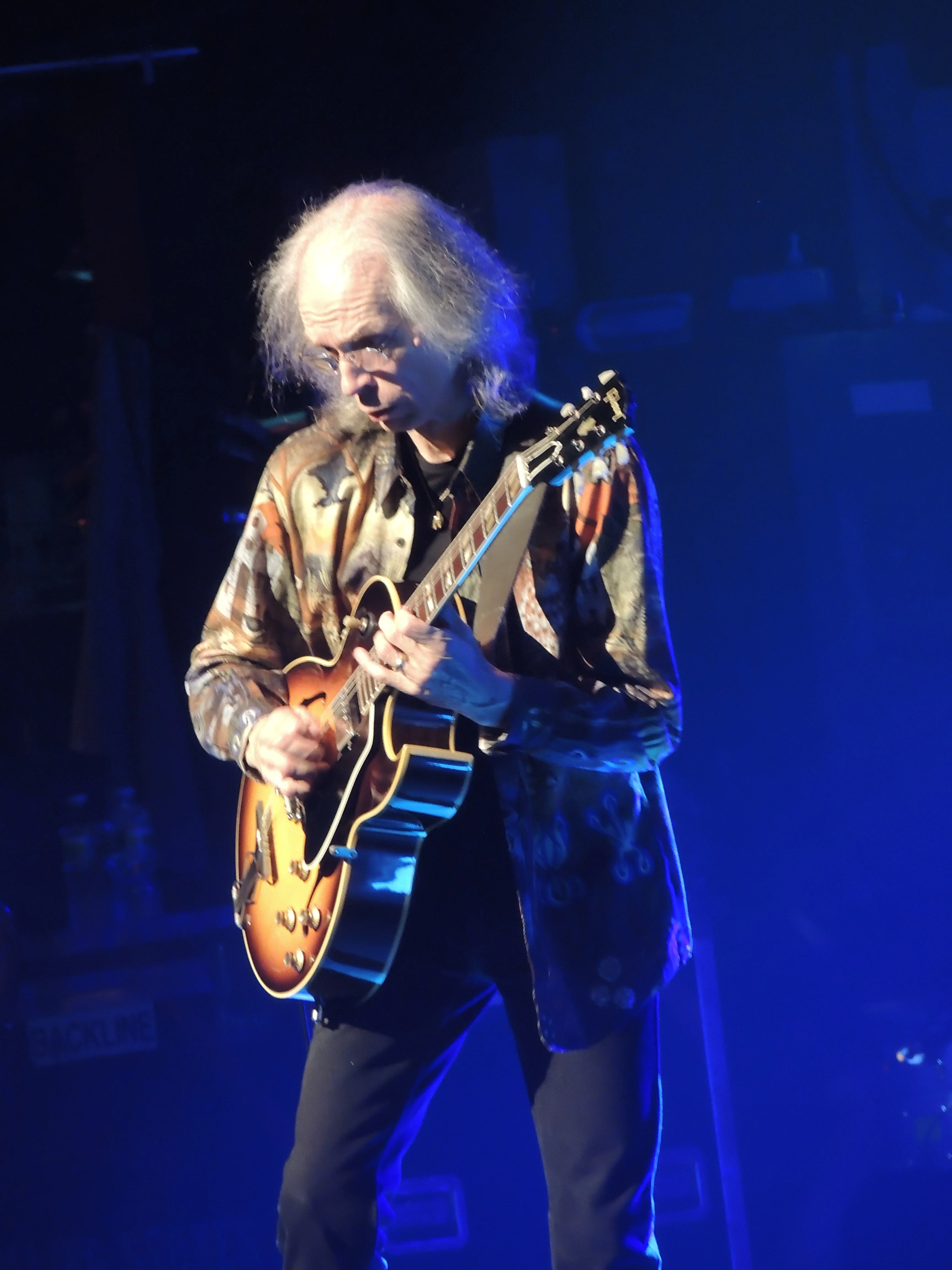
Steve Howe — £500 · Sweet Spot Tone
The £500 · Sweet Spot build for Steve Howe's powerful and driving sound opens with Squier Classic Vibe 60s Jaguar — the tonal foundation that defines the character. Into Boss Katana 50 MkII, the rig comes to ~£498 and delivers the essential elements. Steve Howe of Yes is the most versatile player in progressive rock — moving between jazz archtop, acoustic steel-string, Spanish classical and electric guitar within a single concert, with mastery in each style.
Build Steve Howe's £500 · Sweet Spot Rig
2 pieces · Total ~$632
What guitar does Steve Howe use?
Steve Howe is primarily associated with semi hollow style guitars. At a £500 budget, Squier Classic Vibe 60s Jaguar delivers the essential tonal character.
What to Buy
£500 · Sweet Spot — Complete Gear List
Why This Rig Works
How Steve Howe's gear choices create the signature tone
Squier Classic Vibe 60s Jaguar
The Squier Classic Vibe 60s Jaguar provides the tonal foundation for the entire rig — its character shapes everything that follows.
Boss Katana 50 MkII
Its 'Brown' amp character at low gain is an excellent approximation of the Fender-style clarity that Hendrix, Mayer, Gilmour and SRV all relied on. Built-in effects mean you're a few knob turns away from the right tone.
The Combined Tone
Gibson ES-175 for jazz/fusion sections, Fender Telecaster for rock sections, acoustic guitar for classical/folk parts. The electric tone is a slightly pushed ES-175 through a clean amp — warm and chimey. Howe is a classical guitar-trained player and the classical discipline shows in his right-hand precision.
Tone Tips
Getting the Sound Right
- On the Boss Katana 50 MkII: use the Brown channel — the closest model to a Marshall-voiced preamp at this price. Set character to 8, gain to 5. For Steve Howe's lead volume jump, use the Boost mode rather than adding a separate boost pedal.
- Multiple guitar types are essential — Howe uses different instruments for different musical roles. You cannot replicate Yes guitar parts on a single instrument
- The ES-175 provides the jazz archtop tone — neck pickup, clean amp, thumb-plucking technique for the warmer jazz sections
- Telecaster for rock crunch sections — bridge pickup into a slightly pushed amp for the rock/country-influenced passages
- Classical right-hand technique influences the picking — the fingers are close to the strings, rest stroke on single notes for the same percussive attack
- Chord voicings are jazz-influenced — Howe uses extended chord shapes (7ths, 9ths, 13ths) in rock contexts, adding harmonic sophistication
- A Telecaster's single coils into a Vox AC15 create the brightest, most chimey combination in standard guitar playing — the Vox AC15's class-A circuit adds a piano-like quality to single-coil notes that no other amp type replicates
- Set the delay tempo to the song's BPM: quarter-note delay for a rhythmic pulse; dotted eighth delay for the "Edge effect" that fills space between guitar notes. A mis-set delay that fights the tempo becomes increasingly obvious as the song progresses
Avoid These Pitfalls
Common Mistakes When Chasing This Tone
- Using the same amp EQ as for a solid-body guitar — semi-hollow guitars have natural warmth that makes amp bass and treble settings behave differently. Start flat and adjust from there.
- Using the amp's volume at less than 4 — boutique clean amps are designed to be played at certain output levels. At very low volumes the tone is compressed and flat compared to full-level operation.
- Using a coloured overdrive as a boost where a transparent boost is needed — a TS-style OD adds midrange colour. A Klon-style or clean boost is more neutral and suitable for clean boost applications.
- Too many repeats at high mix — more than 3 repeats makes the delay effect accumulate and overwhelm the dry guitar signal. Keep it to 2-3 repeats at a subtle mix level.
- Using too much reverb on clean passages — prog clean tone should be open and detailed. Long reverb tails wash out the note clarity that makes complex chord voicings readable.
Budget Alternatives
Same Tone, Different Budget
FAQ
Steve Howe Tone — Common Questions
Steve Howe is primarily associated with semi hollow style guitars. At a £500 budget, Squier Classic Vibe 60s Jaguar delivers the essential tonal character.
Steve Howe's amp is boutique clean voiced — clean with headroom, pushed by an overdrive pedal. At the £500 level, Boss Katana 50 MkII is the closest match.
Yes — £500 covers a real guitar and amp in the right tonal family. This rig totals £498 and captures the essential character. The guitar and amp account for 80% of the tone; pedals are secondary at this budget.
Steve Howe's tone is defined by prog-rock, jazzy, country-tinged. The combination of semi hollow guitar and boutique clean amp creates a sound that is immediately recognisable.
Steve Howe's gain approach is clean-boosted — a clean amp pushed by an overdrive pedal. The pedal adds colour; the amp adds body. At £500, this is replicated through Boss Katana 50 MkII.
Steve Howe — £500 · Sweet Spot Complete Rig
~£498Guitar
Squier Classic Vibe 60s Jaguar
Amp
Boss Katana 50 MkII
Tone Match
Closest Real-World Tone Match
If you like Steve Howe's tone, these players use a similar approach — same gear philosophy, comparable sound characteristics.
Related Tones