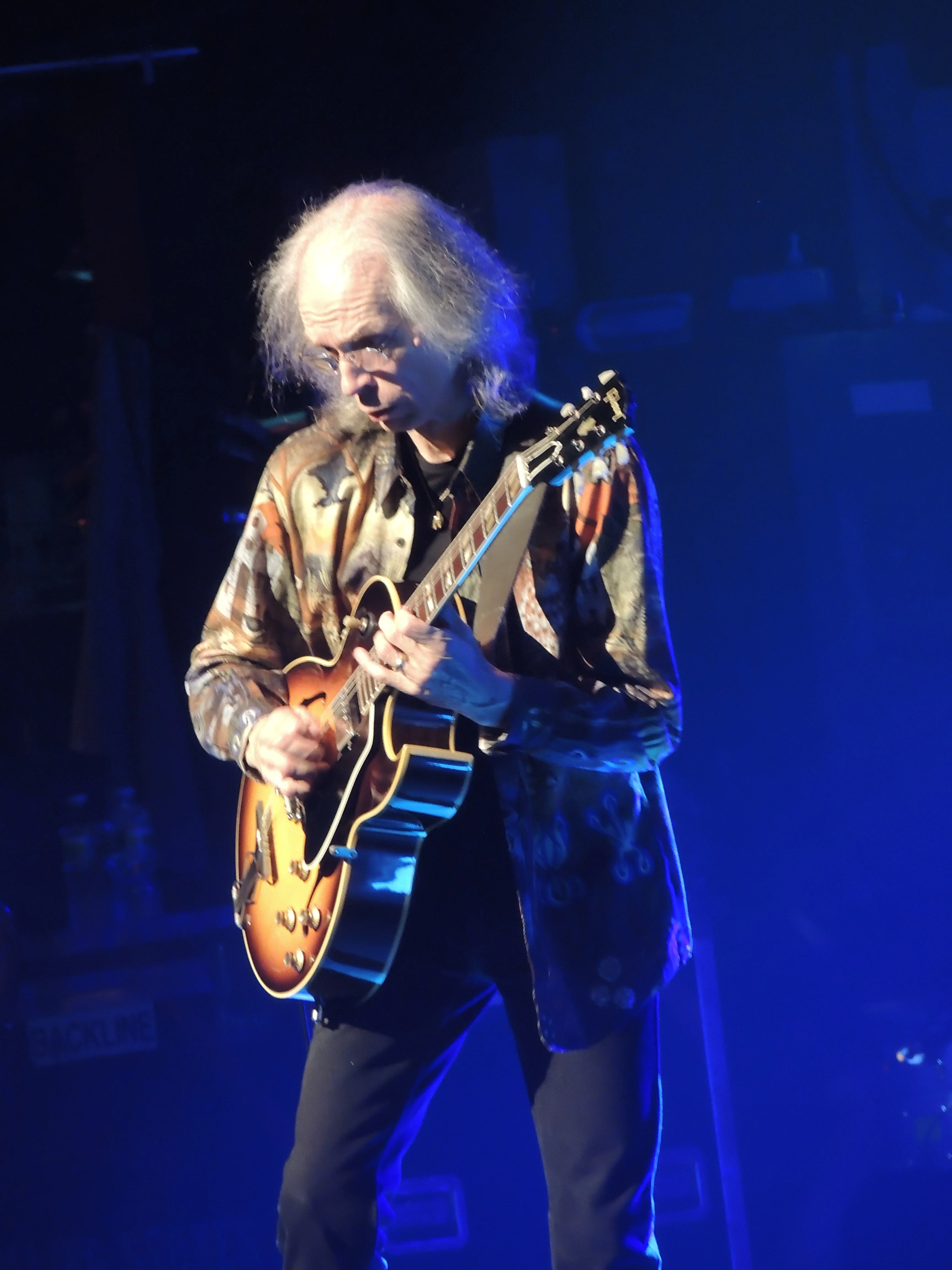
Steve Howe — £1,000 · Pro-Level Tone
The £1,000 · Pro-Level build for Steve Howe's powerful and driving sound opens with Epiphone ES-339 — the tonal foundation that defines the character. Into Boss Katana 100 MkII paired with TC Electronic Flashback 2 and Electro-Harmonix Holy Grail Nano, the rig comes to ~£966 and delivers the essential elements. Steve Howe of Yes is the most versatile player in progressive rock — moving between jazz archtop, acoustic steel-string, Spanish classical and electric guitar within a single concert, with mastery in each style.
Build Steve Howe's £1,000 · Pro-Level Rig
4 pieces · Total ~$1,227
What guitar does Steve Howe use?
Steve Howe is primarily associated with semi hollow style guitars. At a £1,000 budget, Epiphone ES-339 delivers the essential tonal character.
What to Buy
£1,000 · Pro-Level — Complete Gear List
Can't find one? See alternatives:
Why This Rig Works
How Steve Howe's gear choices create the signature tone
Epiphone ES-339
The Epiphone ES-339 provides the tonal foundation for the entire rig — its character shapes everything that follows.
- Delay Enginestudio-grade digital and tape delay echo
- ReverbElectro-Harmonix Holy Grail Nano
Boss Katana 100 MkII
The extra headroom lets you push the clean channel harder before it breaks up, essential for loud-amp technique. More speaker excursion gives a fuller, more three-dimensional clean.
The Combined Tone
Gibson ES-175 for jazz/fusion sections, Fender Telecaster for rock sections, acoustic guitar for classical/folk parts. The electric tone is a slightly pushed ES-175 through a clean amp — warm and chimey. Howe is a classical guitar-trained player and the classical discipline shows in his right-hand precision.
Tone Tips
Getting the Sound Right
- On the Boss Katana 100 MkII: use the Brown channel — the closest model to a Marshall-voiced preamp at this price. Set character to 8, gain to 5. For Steve Howe's lead volume jump, use the Boost mode rather than adding a separate boost pedal.
- Multiple guitar types are essential — Howe uses different instruments for different musical roles. You cannot replicate Yes guitar parts on a single instrument
- The ES-175 provides the jazz archtop tone — neck pickup, clean amp, thumb-plucking technique for the warmer jazz sections
- Chord voicings are jazz-influenced — Howe uses extended chord shapes (7ths, 9ths, 13ths) in rock contexts, adding harmonic sophistication
- Study "Roundabout," "Mood for a Day" and "Clap" — these represent acoustic and electric in equal measure
- The rhythmic approach is orchestral — guitar parts fit within an arrangement, not on top of it. Study how guitar interacts with Jon Anderson's voice and Rick Wakeman's keyboards
- Country steel-string technique (hybrid picking) appears in some Howe passages — the country influence from his work with Asia shows
Avoid These Pitfalls
Common Mistakes When Chasing This Tone
- Using the same amp EQ as for a solid-body guitar — semi-hollow guitars have natural warmth that makes amp bass and treble settings behave differently. Start flat and adjust from there.
- Using the amp's volume at less than 4 — boutique clean amps are designed to be played at certain output levels. At very low volumes the tone is compressed and flat compared to full-level operation.
- Using too much reverb on clean passages — prog clean tone should be open and detailed. Long reverb tails wash out the note clarity that makes complex chord voicings readable.
- Ignoring the room or PA system — prog guitar changes tone dramatically in different acoustic environments. Dialling in EQ in isolation gives a different result than through a full PA.
Budget Alternatives
Same Tone, Different Budget
FAQ
Steve Howe Tone — Common Questions
Steve Howe is primarily associated with semi hollow style guitars. At a £1,000 budget, Epiphone ES-339 delivers the essential tonal character.
Steve Howe's amp is boutique clean voiced — clean with headroom, pushed by an overdrive pedal. At the £1,000 level, Boss Katana 100 MkII is the closest match.
The £1,000 tier adds noticeably better build quality and tonal nuance over the £500 rig. This build totals £966 with Epiphone ES-339, Boss Katana 100 MkII, 2 effects. This is the tier where the tone becomes genuinely convincing for gigging and recording.
Steve Howe's essential pedals include Reverb, Delay. At the £1,000 tier: TC Electronic Flashback 2, Electro-Harmonix Holy Grail Nano. Reverb is the most important pedal — the others add nuance.
Steve Howe's tone is defined by prog-rock, jazzy, country-tinged. The combination of semi hollow guitar and boutique clean amp creates a sound that is immediately recognisable.
Steve Howe's gain approach is clean-boosted — a clean amp pushed by an overdrive pedal. The pedal adds colour; the amp adds body. At £1,000, this is replicated through Boss Katana 100 MkII paired with TC Electronic Flashback 2.
Steve Howe — £1,000 · Pro-Level Complete Rig
~£966Guitar
Epiphone ES-339
Amp
Boss Katana 100 MkII
Delay
TC Electronic Flashback 2
Reverb
Electro-Harmonix Holy Grail Nano
Tone Match
Closest Real-World Tone Match
If you like Steve Howe's tone, these players use a similar approach — same gear philosophy, comparable sound characteristics.
Related Tones