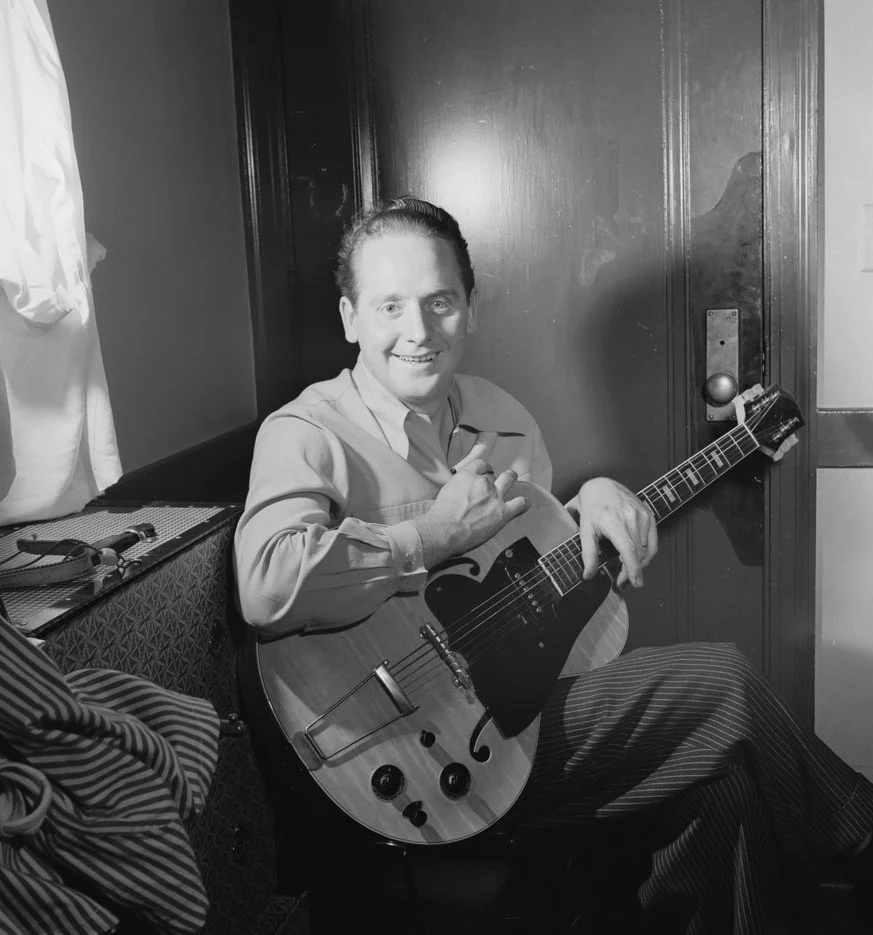
Les Paul — £2,500 · Premium Tone
At £2,500 · Premium, Les Paul's nuanced and harmonically sophisticated tone is more accessible than most players expect. Rooted in the birth of amplified guitar, their sound — Les Paul is the architect of the modern electric guitar — inventor of multi-track tape recording, solid body electric guitar design, overdubbing, and delay effects, as well as one of the most technically gifted jazz and country guitarists of the twentieth century. — starts with Gretsch G5420T Electromatic and Fender Deluxe Reverb (Reissue), totalling ~£2475. That combination captures the defining characteristics without the premium price tag.
Build Les Paul's £2,500 · Premium Rig
5 pieces · Total ~$3,143
What guitar does Les Paul use?
Les Paul is primarily associated with hollow style guitars. At a £2,500 budget, Gretsch G5420T Electromatic delivers the essential tonal character.
What to Buy
£2,500 · Premium — Complete Gear List
Can't find one? See alternatives:
Why This Rig Works
How Les Paul's gear choices create the signature tone
Gretsch G5420T Electromatic
The Gretsch G5420T Electromatic provides the tonal foundation for the entire rig — its character shapes everything that follows.
- Dynamics Shapertransparent dynamic control and singing sustain
- DelayStrymon Timeline
- ReverbStrymon Flint
Fender Deluxe Reverb (Reissue)
The Fender Deluxe Reverb (Reissue) converts the guitar signal into audible sound and adds its own tonal character — EQ shaping, natural gain, and the overall feel of the final tone.
The Combined Tone
Les Paul's own guitar tone is clean, warm and bright — his black "Black Beauty" Les Paul Custom or his early Log prototype into a clean Ampex or broadcast amplifier chain, often with his self-invented tape echo for rhythmic slap-back effects. Multi-tracking allowed him to harmonise with himself in layers, creating a sound that was fuller than any live band could produce. His clean single-note runs have a glass-clear articulation that owes more to jazz guitar tradition than rock. The overdubs create a shimmering, prismatic stereo spread that was decades ahead of its time.
Tone Tips
Getting the Sound Right
- The Fender Deluxe Reverb (Reissue) stays cleaner longer than a Marshall-style amp — push it with a low-gain overdrive (gain at 2–3, level up) rather than cranking its own gain. Set treble at 6, bass at 4, and let the guitar's volume knob handle the dynamics.
- Use clean amp settings and rely on multiple harmonised guitar parts for fullness
- Tape slap-back echo (80–120ms) adds depth without obscuring the melody
- The humbucker pickup's mid-forward warmth is best expressed through a clean or very lightly overdriven amp — distortion removes the harmonic clarity that makes the Les Paul's neck pickup so distinctive. Les Paul's own recordings used relatively clean amplification throughout
- Heavier string gauge than modern standard produces more physical volume and sustain from the guitar — the increased tension requires more precise intonation setup but rewards with a bigger, more resonant acoustic tone that translates to a fuller amplified sound
- Multi-tracking's musical purpose is to serve the arrangement — Les Paul used layering to fill out the harmonic texture of a duo performance, not to display technical capability. Each additional layer must add harmonic or rhythmic content that the existing tracks do not contain
- The music is primarily melody-based — Les Paul's jazz guitar recordings are vocal in character, playing the melody of the song with clear ornamentation and tasteful embellishment rather than extensive improvisation. Master the melody before adding any improvised variations
Avoid These Pitfalls
Common Mistakes When Chasing This Tone
- Using high-gain distortion — hollowbody guitars are designed for clean and light-drive use. High gain causes uncontrollable acoustic resonance that the pickup amplifies as noise.
- Using the amp's volume at less than 4 — boutique clean amps are designed to be played at certain output levels. At very low volumes the tone is compressed and flat compared to full-level operation.
- Too many repeats at high mix — more than 3 repeats makes the delay effect accumulate and overwhelm the dry guitar signal. Keep it to 2-3 repeats at a subtle mix level.
- Keeping the tone knob at 10 — full treble on a jazz guitar gives a nasal, honky quality that sounds nothing like the warm round jazz ideal.
- Using round-wound strings — they are brighter, last longer, and have more sustain, but they also sound more "electric" and less woody than flat-wounds for jazz.
Budget Alternatives
Same Tone, Different Budget
FAQ
Les Paul Tone — Common Questions
Les Paul is primarily associated with hollow style guitars. At a £2,500 budget, Gretsch G5420T Electromatic delivers the essential tonal character.
Les Paul's amp is boutique clean voiced — clean to moderate gain. At the £2,500 level, Fender Deluxe Reverb (Reissue) is the closest match.
The £2,500 tier uses Les Paul's actual gear choices or direct equivalents. Total: £2,475. The tonal step up from £1,000 is real but diminishing — worth it for regular performers and studio work.
Les Paul's essential pedals include Delay, Reverb. At the £2,500 tier: Boss CS-3 Compression Sustainer, Strymon Timeline, Strymon Flint. Delay is the most important pedal — the others add nuance.
Les Paul's tone is defined by tape-echo, multitrack-pioneer, warm-archtop. The combination of hollow guitar and boutique clean amp creates a sound that is immediately recognisable.
Les Paul's gain approach is very clean — minimal distortion even at volume. The tone comes from the amp's natural warmth. At £2,500, this is replicated through Fender Deluxe Reverb (Reissue) paired with Boss CS-3 Compression Sustainer.
Les Paul — £2,500 · Premium Complete Rig
~£2475Guitar
Gretsch G5420T Electromatic
Compression
Boss CS-3 Compression Sustainer
Amp
Fender Deluxe Reverb (Reissue)
Delay
Strymon Timeline
Reverb
Strymon Flint
Tone Match
Closest Real-World Tone Match
If you like Les Paul's tone, these players use a similar approach — same gear philosophy, comparable sound characteristics.
Related Tones