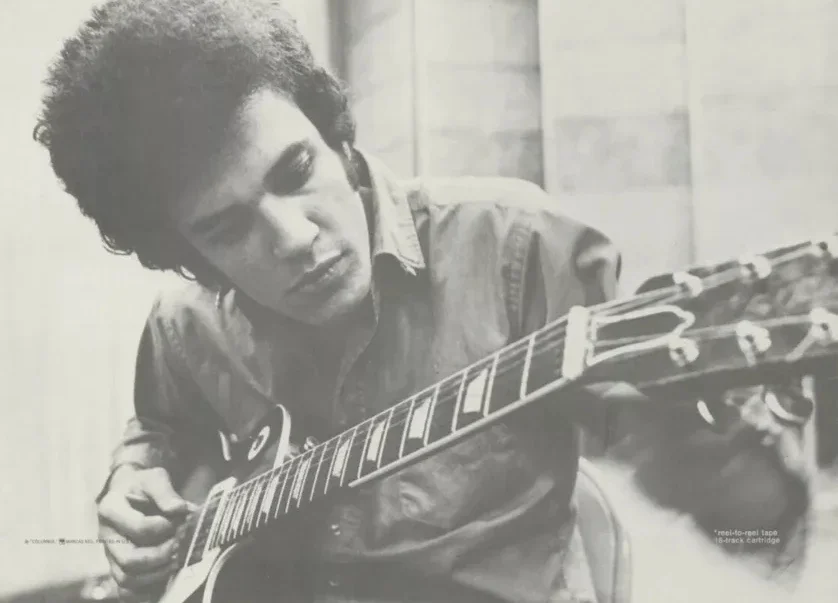
Mike Bloomfield — £2,500 · Premium Tone
Mike Bloomfield brought the electric blues to white rock audiences — his work with the Paul Butterfield Blues Band and on Bob Dylan's "Highway 61 Revisited" introduced millions to the Chicago electric blues tradition. Replicating that soulful and deeply expressive sound at the £2,500 · Premium mark means Gibson Les Paul Junior into Fender Blues DeVille. The effects — Boss BD-2 Blues Driver, MXR Carbon Copy Analog Delay — add the finishing texture. This build totals ~£2495 and captures the core character — a premium build targeting the most accurate recreation possible.
Build Mike Bloomfield's £2,500 · Premium Rig
5 pieces · Total ~$3,169
What guitar does Mike Bloomfield use?
Mike Bloomfield is primarily associated with lp style guitars. At a £2,500 budget, Gibson Les Paul Junior delivers the essential tonal character.
What to Buy
£2,500 · Premium — Complete Gear List
Can't find one? See alternatives:
Why This Rig Works
How Mike Bloomfield's gear choices create the signature tone
Gibson Les Paul Junior
The Gibson Les Paul Junior delivers warm humbucker thickness and singing sustain — the classic foundation for rock and blues tones.
- OverdriveBoss BD-2 Blues Driver
- DelayMXR Carbon Copy Analog Delay
- ReverbStrymon Flint
Fender Blues DeVille
The Fender Blues DeVille converts the guitar signal into audible sound and adds its own tonal character — EQ shaping, natural gain, and the overall feel of the final tone.
The Combined Tone
Gibson Les Paul into a clean-to-slightly-dirty Fender amp. The tone is mid-heavy and singing — Les Paul humbucker warmth through a Fender that breaks up gently on note attacks. No excessive gain; the Chicago blues tradition is about feel and dynamics, not high distortion.
Tone Tips
Getting the Sound Right
- The Fender Blues DeVille stays cleaner longer than a Marshall-style amp — push it with a low-gain overdrive (gain at 2–3, level up) rather than cranking its own gain. Set treble at 6, bass at 4, and let the guitar's volume knob handle the dynamics.
- Fluid legato phrasing in the Chicago blues tradition — smooth hammer-on and pull-off runs connecting chord tones across the neck
- The Les Paul neck pickup for the warm, vocal lead quality — bridge pickup is too bright and aggressive for this style
- The vibrato is wide and slow on long notes — the final note of a phrase, held and vibrated until it fades, is the punctuation mark of the Chicago blues phrase
- Study the Albert King and B.B. King synthesis in his phrasing — Bloomfield combined Albert King's aggressive downward pull-bends with B.B. King's vocal vibrato into his own style. Transcribing phrases from 'Super Session' and identifying which influence each comes from builds vocabulary awareness
- The Les Paul bridge pickup through a slightly overdriven Fender Super Reverb gives the 'Super Session' tone — the combination produces thick upper-mid presence with singing sustain on high notes. The Fender's clean character means the LP's output and the light overdrive do all the work
- Left-hand muting between phrases is deliberate and consistent — Bloomfield cuts each phrase decisively rather than letting notes decay naturally. This creates sharp silence between ideas, making the structure of his soloing clearer and preventing harmonic muddiness in a full-band context
Avoid These Pitfalls
Common Mistakes When Chasing This Tone
- Setting the TS9 gain above 5 into a clean amp — at high gain settings the TS becomes a distortion pedal that colours the tone heavily. Below 4, it's a boost and focus pedal. Single coils into a TS above 5 gets nasal and harsh
- Setting the amp bass too high — the inherent warmth of mahogany means you need less bass EQ than with a Strat. Starting at 5 rather than 7 prevents low-end mud.
- Ignoring the guitar volume knob — rolling back to 6-7 is your rhythm setting; 10 is for leads. Most players leave it at 10 and miss the entire dynamic vocabulary.
- Using a humbucker where single coils are needed — the quack, string definition, and high-frequency air of single coils cannot be EQ'd into a humbucker
Budget Alternatives
Same Tone, Different Budget
FAQ
Mike Bloomfield Tone — Common Questions
Mike Bloomfield is primarily associated with lp style guitars. At a £2,500 budget, Gibson Les Paul Junior delivers the essential tonal character.
Mike Bloomfield's amp is vintage blues voiced — the amp running hot, providing natural tube saturation. At the £2,500 level, Fender Blues DeVille is the closest match.
The £2,500 tier uses Mike Bloomfield's actual gear choices or direct equivalents. Total: £2,495. The tonal step up from £1,000 is real but diminishing — worth it for regular performers and studio work.
Mike Bloomfield's essential pedals include Overdrive. At the £2,500 tier: Boss BD-2 Blues Driver, MXR Carbon Copy Analog Delay, Strymon Flint. Overdrive is the most important pedal — the others add nuance.
Mike Bloomfield's tone is defined by chicago-blues-rock, raw-les-paul, early-electric-blues. The combination of lp guitar and vintage blues amp creates a sound that is immediately recognisable.
Mike Bloomfield's gain approach is amp-driven — natural tube saturation from pushing the amp hard, not from distortion pedals. At £2,500, this is replicated through Fender Blues DeVille paired with Boss BD-2 Blues Driver.
Mike Bloomfield — £2,500 · Premium Complete Rig
~£2495Guitar
Gibson Les Paul Junior
Overdrive
Boss BD-2 Blues Driver
Amp
Fender Blues DeVille
Delay
MXR Carbon Copy Analog Delay
Reverb
Strymon Flint
Tone Match
Closest Real-World Tone Match
If you like Mike Bloomfield's tone, these players use a similar approach — same gear philosophy, comparable sound characteristics.
Related Tones