John McLaughlin — Rig Network
8 gear items · 24 artist connections · John McLaughlin profile
Guitars
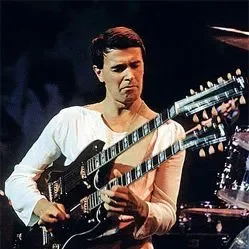
The iconic Mahavishnu guitar — a Gibson doubleneck with six-string and twelve-string necks. McLaughlin switches between them within songs: the twelve-string for chord passages and harmonic interludes, the six for his blinding lead lines. The doubleneck is one of the most recognisable instruments in rock/jazz fusion history.
Unique to this artist in the database
Pre-Mahavishnu electric archtop — the L-5 for the Miles Davis sessions and early fusion recordings. The L-5's warm, full archtop tone through Miles's production created the ambient electric jazz sound of Bitches Brew.
Custom French-built guitar used from the 1980s onward — Vigier guitars are known for their stainless steel frets and phenowood fretboard composition, reducing friction and extending durability for McLaughlin's extreme playing demands.
Unique to this artist in the database
Used throughout the Shakti period and acoustic solo work — the nylon-string flamenco guitar for Indian-influenced acoustic performances requiring a brighter, more percussive attack than a classical guitar.
Unique to this artist in the database
Amplifiers
McLaughlin was one of the earliest adopters of the Mesa/Boogie — Randall Smith built the original Mark I circuit partly in response to McLaughlin's requirements for a compact amp with Plexi-level gain. The Mark I's warm, compressed overdrive suits his extreme picking speed by maintaining note separation under high velocity.
The solid-state Roland JC-120 for clean, chorus-enhanced jazz tones — the built-in stereo chorus provides the shimmering, spatially wide clean sound for the Shakti-adjacent acoustic-electric material.
Pedals & Effects
Used on the Miles Davis sessions for specific electric tone passages — the early Maestro circuit adds a compressed, harmonically dense quality to the amplified electric guitar, contributing to the dense sound of Bitches Brew.
Wah used selectively within Mahavishnu performances for tonal shaping on extended solos — McLaughlin is not a constant-wah player but uses it as an expressive filter on specific passages.
Most Similar Rigs
Artists who share the most actual gear with John McLaughlin — ranked by equipment overlap.